
Showing posts with label form 5. Show all posts
Showing posts with label form 5. Show all posts
Monday, 12 May 2014

Monday, 13 May 2013
(Reading) Home Exploring Robot Butler
Let's read an article about the HERB robot (Form 5 theme)
More Than a Good Eye: Robot Uses Arms, Location and More to Discover Objects

May 6, 2013 — A robot can
struggle to discover objects in its surroundings when it relies on
computer vision alone. But by taking advantage of all of the information
available to it -- an object's location, size, shape and even whether
it can be lifted -- a robot can continually discover and refine its
understanding of objects, say researchers at Carnegie Mellon
University's Robotics Institute.
The Lifelong Robotic Object Discovery (LROD) process developed by the
research team enabled a two-armed, mobile robot to use color video, a
Kinect depth camera and non-visual information to discover more than 100
objects in a home-like laboratory, including items such as computer
monitors, plants and food items.
Normally, the CMU researchers build digital models and images of
objects and load them into the memory of HERB -- the Home-Exploring
Robot Butler -- so the robot can recognize objects that it needs to
manipulate. Virtually all roboticists do something similar to help their
robots recognize objects. With the team's implementation of LROD,
called HerbDisc, the robot now can discover these objects on its own.
With more time and experience, HerbDisc gradually refines its models
of the objects and begins to focus its attention on those that are most
relevant to its goal -- helping people accomplish tasks of daily living.
Findings from the research study will be presented May 8 at the IEEE
International Conference on Robotics and Automation in Karlsruhe,
Germany.
The robot's ability to discover objects on its own sometimes takes
even the researchers by surprise, said Siddhartha Srinivasa, associate
professor of robotics and head of the Personal Robotics Lab, where HERB
is being developed. In one case, some students left the remains of lunch
-- a pineapple and a bag of bagels -- in the lab when they went home
for the evening. The next morning, they returned to find that HERB had
built digital models of both the pineapple and the bag and had figured
out how it could pick up each one
.
"We didn't even know that these objects existed, but HERB did," said
Srinivasa, who jointly supervised the research with Martial Hebert,
professor of robotics. "That was pretty fascinating."
Discovering and understanding objects in places filled with hundreds
or thousands of things will be a crucial capability once robots begin
working in the home and expanding their role in the workplace. Manually
loading digital models of every object of possible relevance simply
isn't feasible, Srinivasa said. "You can't expect Grandma to do all
this," he added.
Object recognition has long been a challenging area of inquiry for
computer vision researchers. Recognizing objects based on vision alone
quickly becomes an intractable computational problem in a cluttered
environment, Srinivasa said. But humans don't rely on sight alone to
understand objects; babies will squeeze a rubber ducky, beat it against
the tub, dunk it -- even stick it in their mouth. Robots, too, have a
lot of "domain knowledge" about their environment that they can use to
discover objects.
Taking advantage of all of HERB's senses required a research team
with complementary expertise -- Srinivasa's insights on robotic
manipulation and Hebert's in-depth knowledge of computer vision. Alvaro
Collet, a robotics Ph.D. student they co-advised, led the development of
HerbDisc. Collet is now a scientist at Microsoft.
Depth measurements from HERB's Kinect sensors proved to be
particularly important, Hebert said, providing three-dimensional shape
data that is highly discriminative for household items.
Other domain knowledge available to HERB includes location -- whether
something is on a table, on the floor or in a cupboard. The robot can
see whether a potential object moves on its own, or is moveable at all.
It can note whether something is in a particular place at a particular
time. And it can use its arms to see if it can lift the object -- the
ultimate test of its "objectness."
"The first time HERB looks at the video, everything 'lights up' as a
possible object," Srinivasa said. But as the robot uses its domain
knowledge, it becomes clearer what is and isn't an object. The team
found that adding domain knowledge to the video input almost tripled the
number of objects HERB could discover and reduced computer processing
time by a factor of 190. A HERB's-eye view of objects is available on
YouTube
.
HERB's definition of an object -- something it can lift -- is
oriented toward its function as an assistive device for people, doing
things such as fetching items or microwaving meals. "It's a very
natural, robot-driven process," Srinivasa said. "As capabilities and
situations change, different things become important." For instance,
HERB can't yet pick up a sheet of paper, so it ignores paper. But once
HERB has hands capable of manipulating paper, it will learn to recognize
sheets of paper as objects.
Though not yet implemented, HERB and other robots could use the
Internet to create an even richer understanding of objects. Earlier work
by Srinivasa showed that robots can use crowdsourcing via Amazon
Mechanical Turk to help understand objects. Likewise, a robot might
access image sites, such as RoboEarth, ImageNet or 3D Warehouse, to find
the name of an object, or to get images of parts of the object it can't
see.
Bo Xiong, a student at Connecticut College, and Corina Gurau, a
student at Jacobs University in Bremen, Germany, also contributed to
this study.
_____________________________________________________So now we know that the future is near ;)
Taken from sciencedaily
Tuesday, 7 May 2013
Saturday, 6 April 2013
Waste Management part 3 (Science and Technology Form 5)
| ||||||||||
|


Wate Management, part 2. (Science and Technology Form 5)
INCINERATION


Waste Management (Science and Technology Form 5)
WASTE MANAGEMENT
 |
| Waste management in Kathmandu (Nepal) |
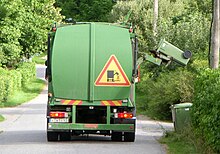 |
| Waste management in Stockholm (Sweden) |
Subscribe to:
Comments (Atom)